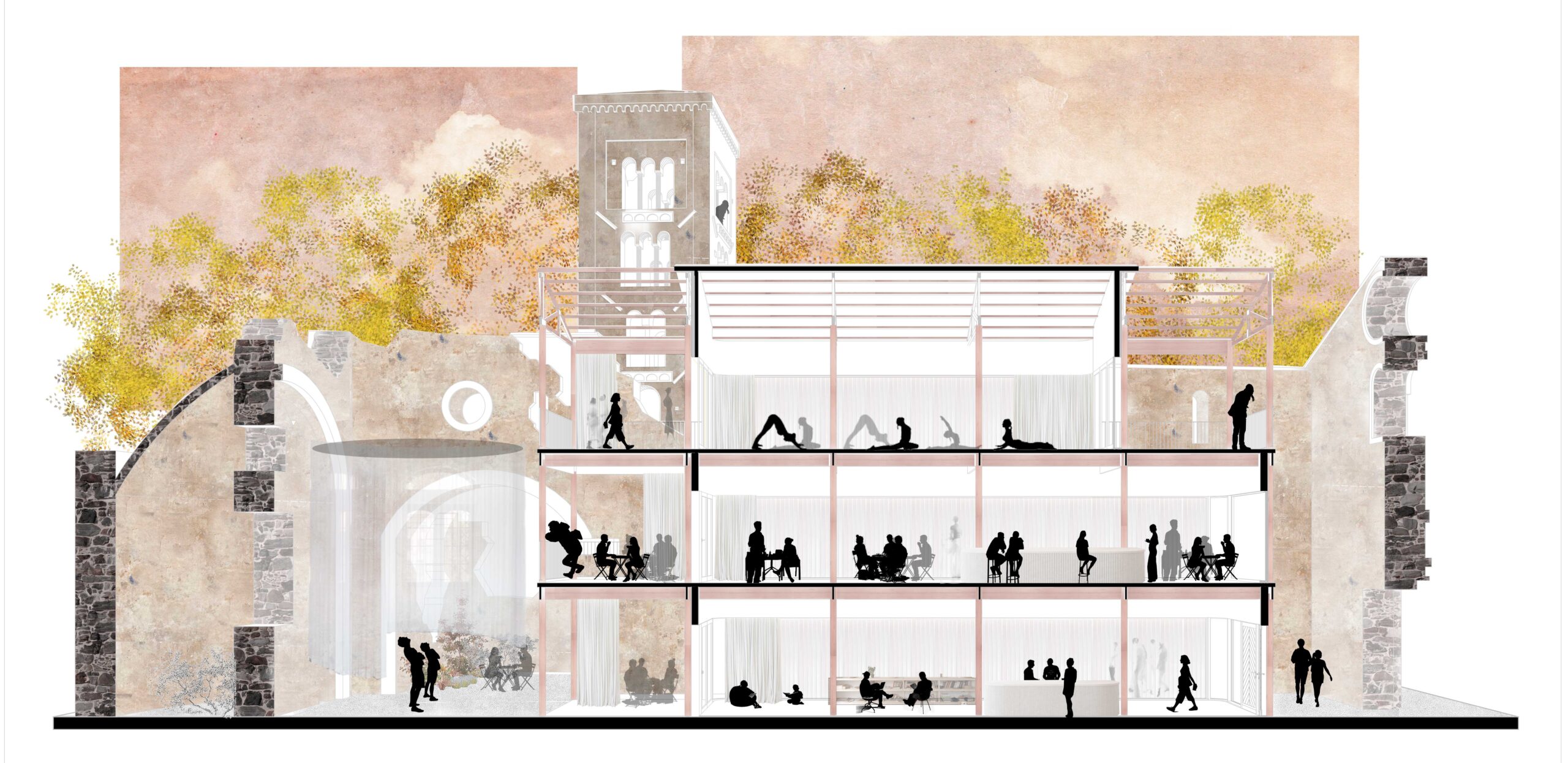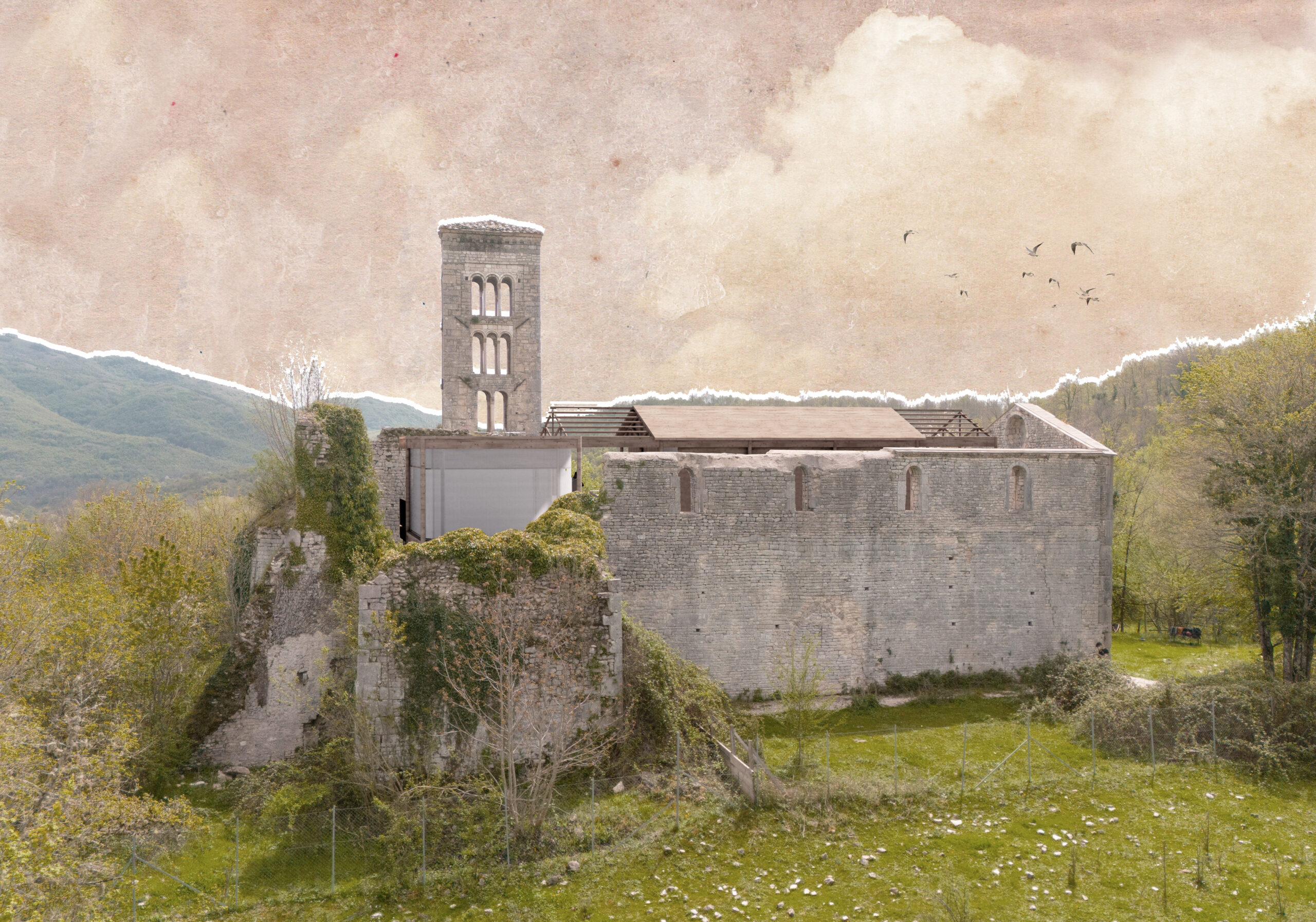
RESPIROdelleROVINE emerges at the Abbey of San Maria del Piano as a testament to preservation and innovation—a contemporary volume that exists in harmonious dialogue with centuries-old ruins.
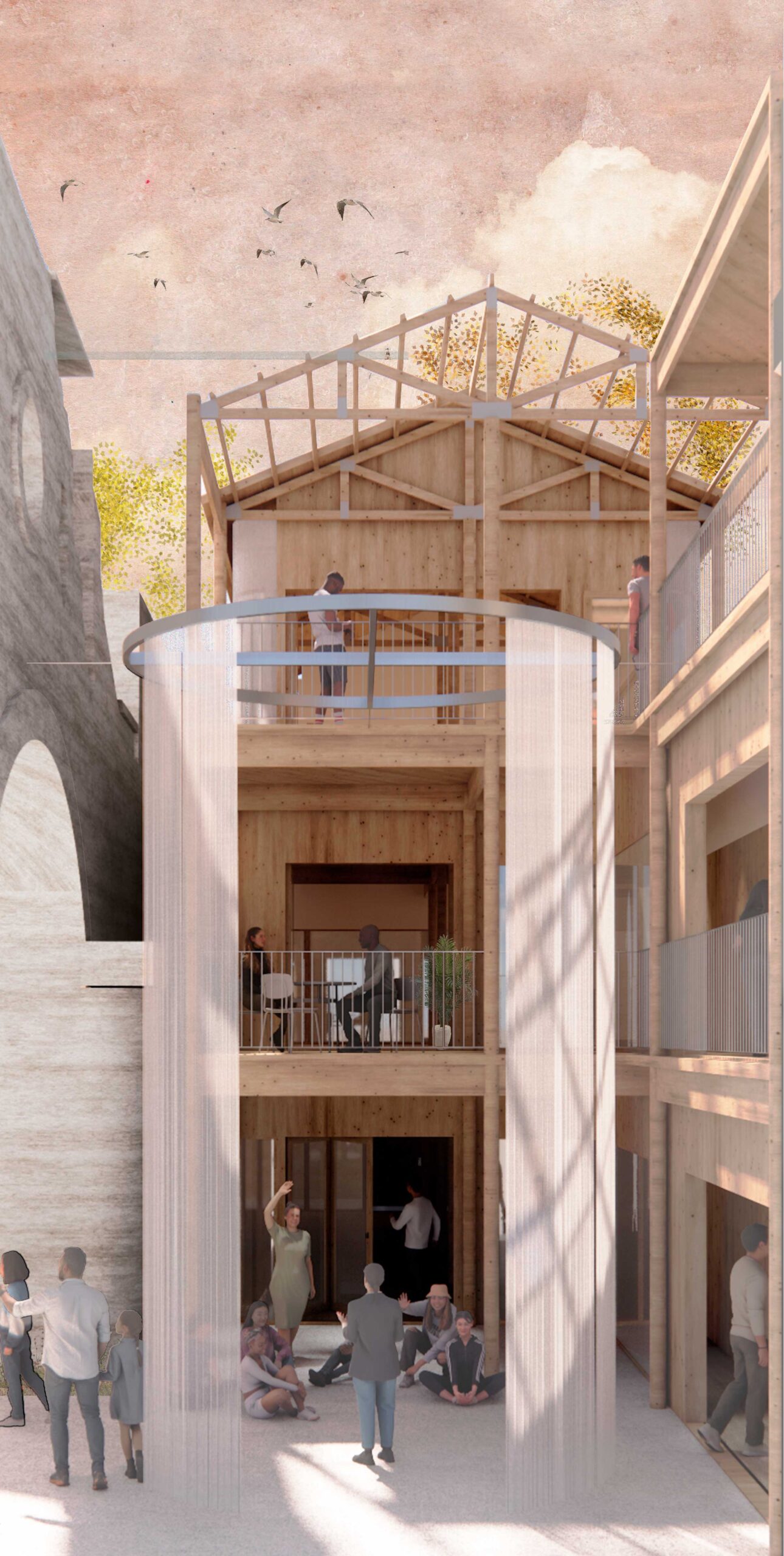
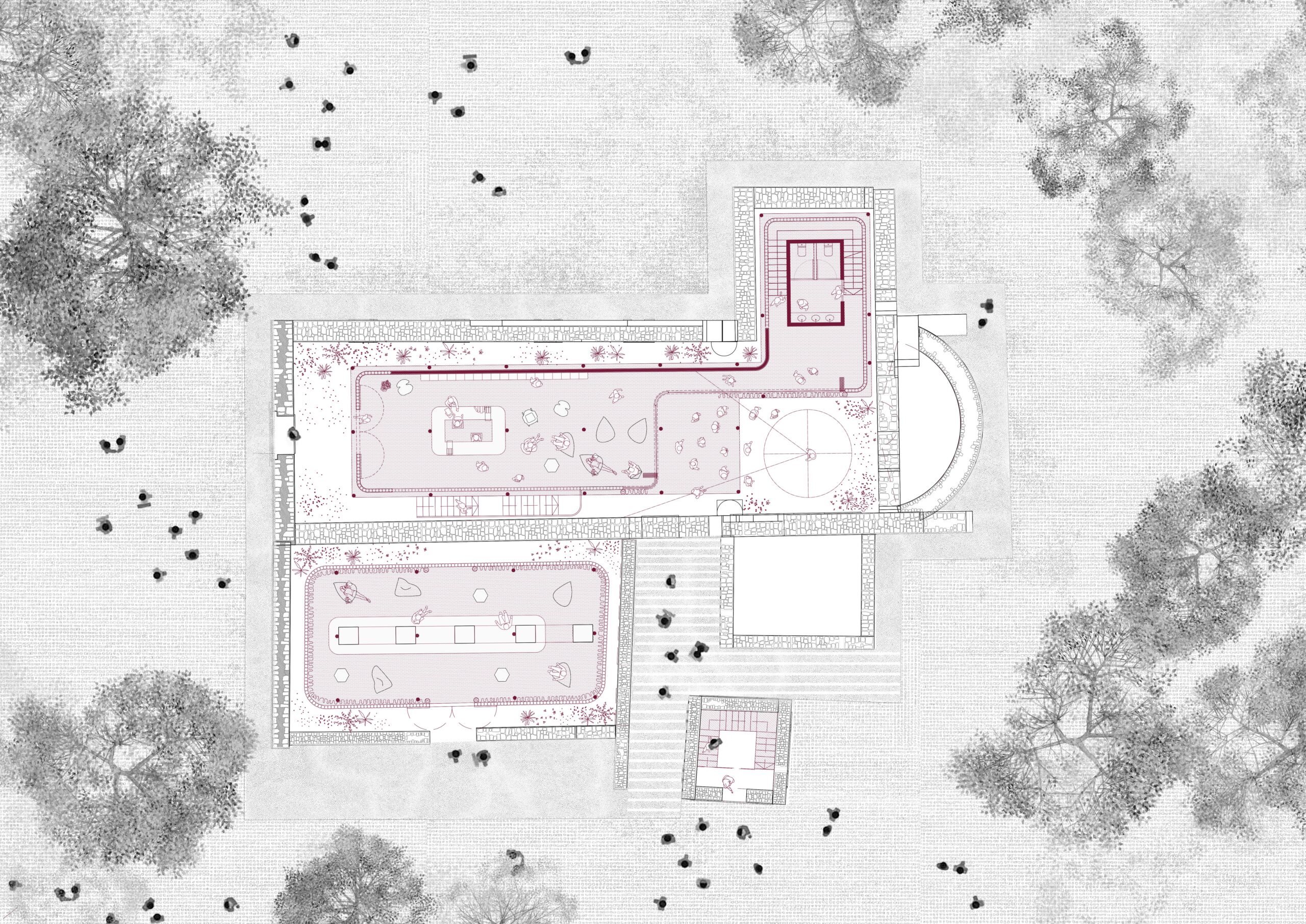
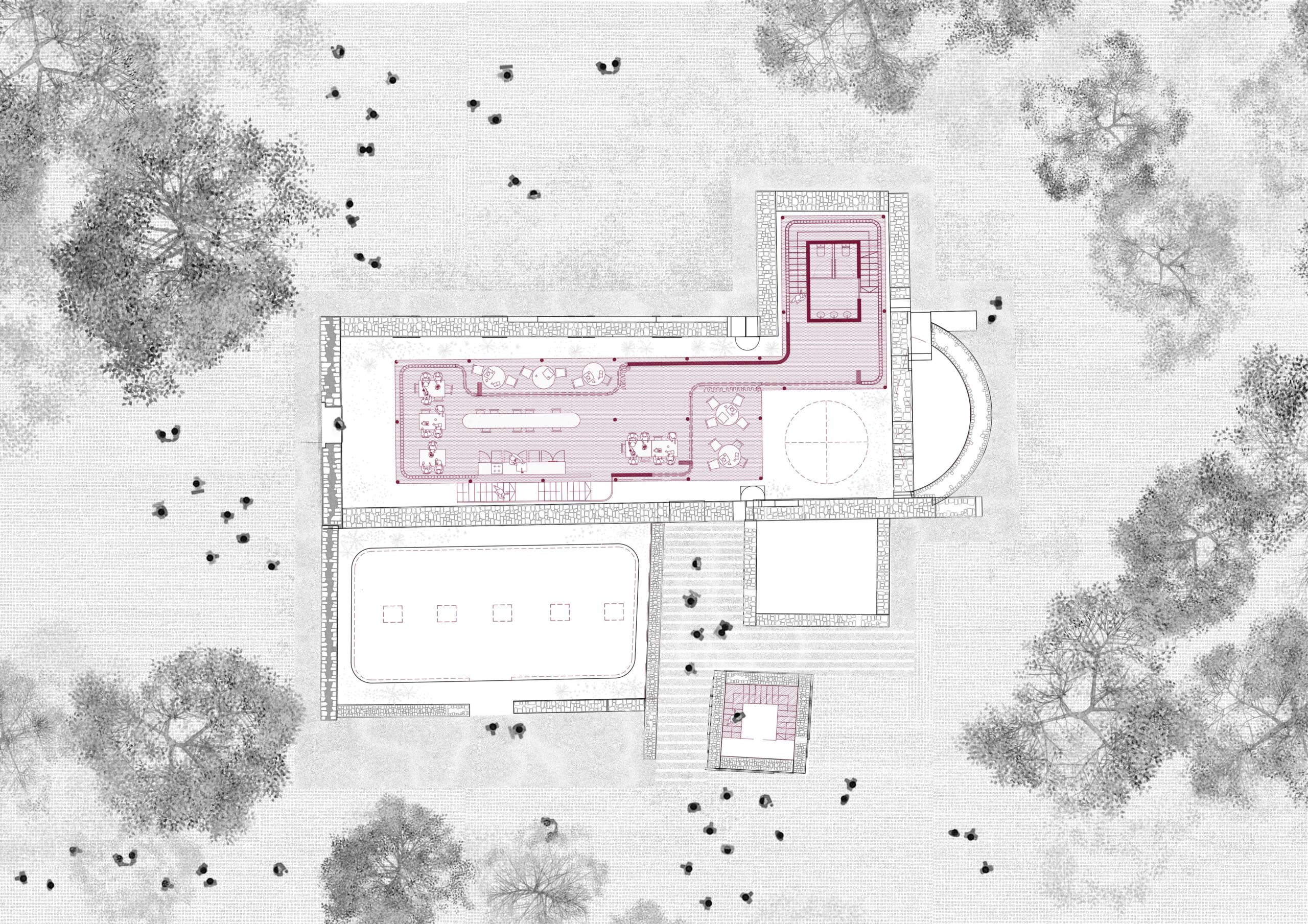
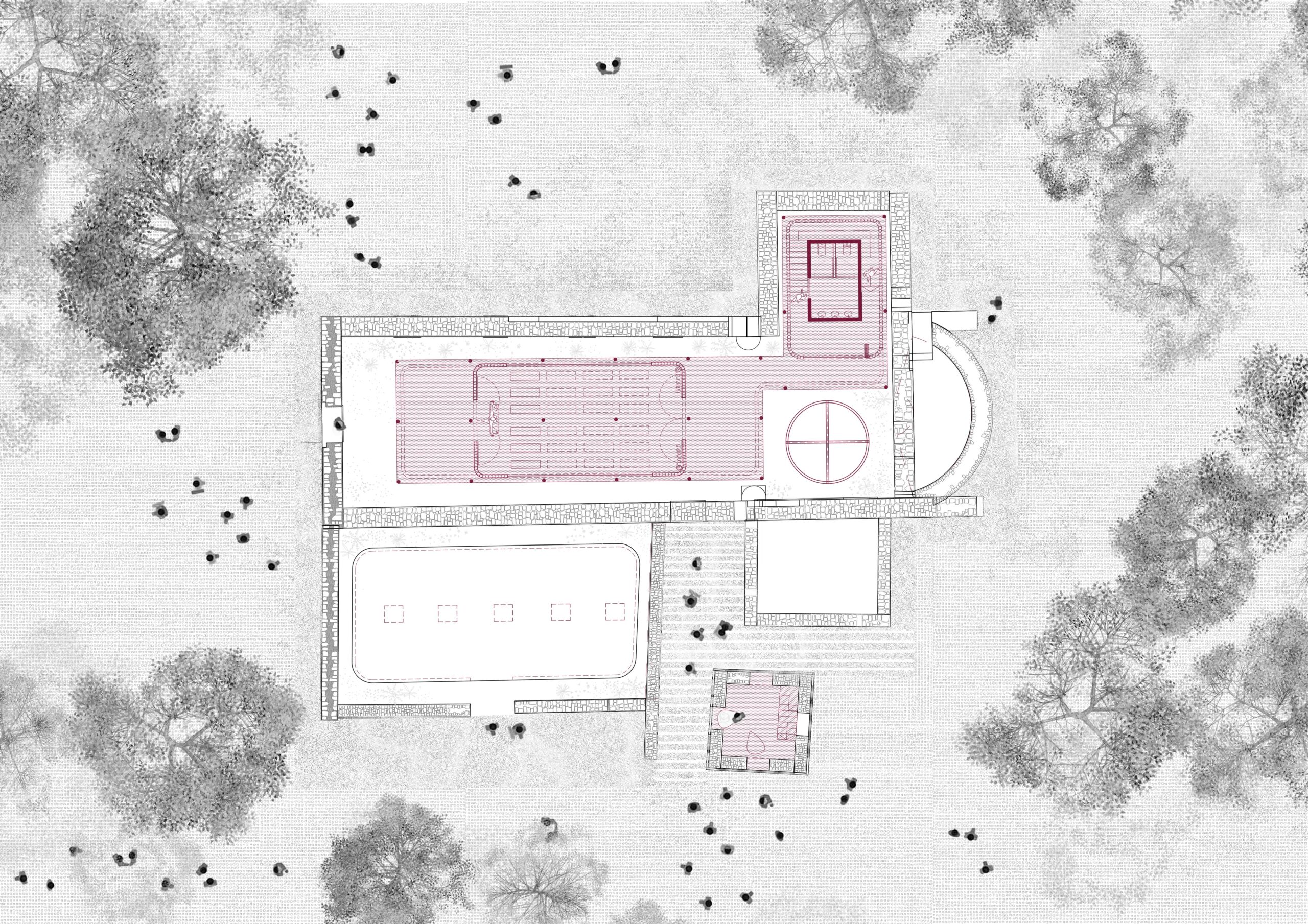
Like its name suggests, the intervention breathes within the ancient walls while maintaining a deliberate one-meter perimeter gap, allowing for a living threshold where nature freely weaves between old and new. This interplay echoes the Abbey’s natural evolution, where time has allowed vegetation to become an integral part of its architectural narrative.
The design’s profound respect for history manifests in its reversible nature: the intervention could be removed without leaving a trace on the original structure. The project doesn’t seek to complete the ruins but rather to encapsulate modern activity within them. The wooden roof structure, crafted from native oak, chestnut, and fir sourced within 100 kilometers, subtly evokes the Abbey’s original enclosure lost in 1855, simulating a memory of what once was.
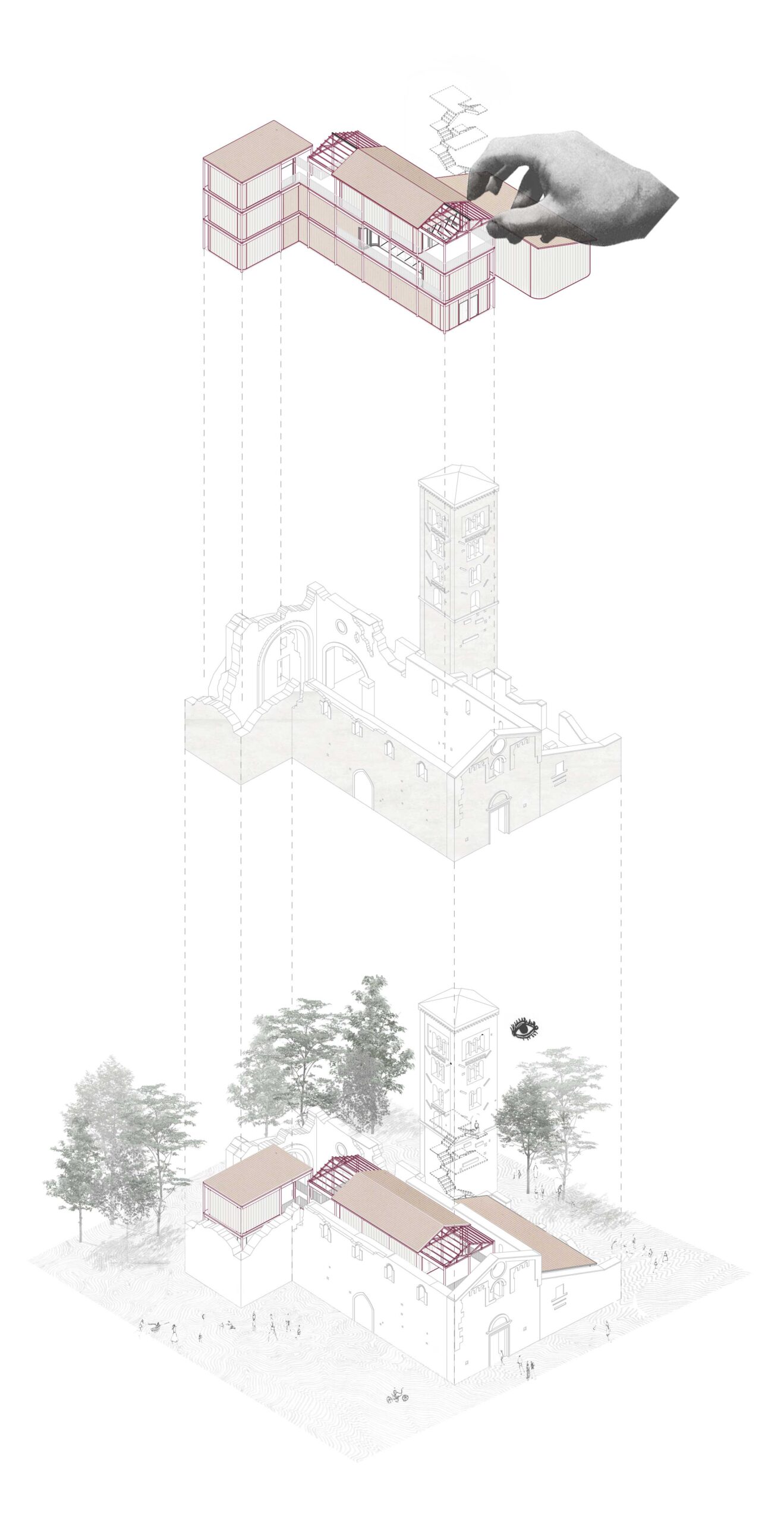
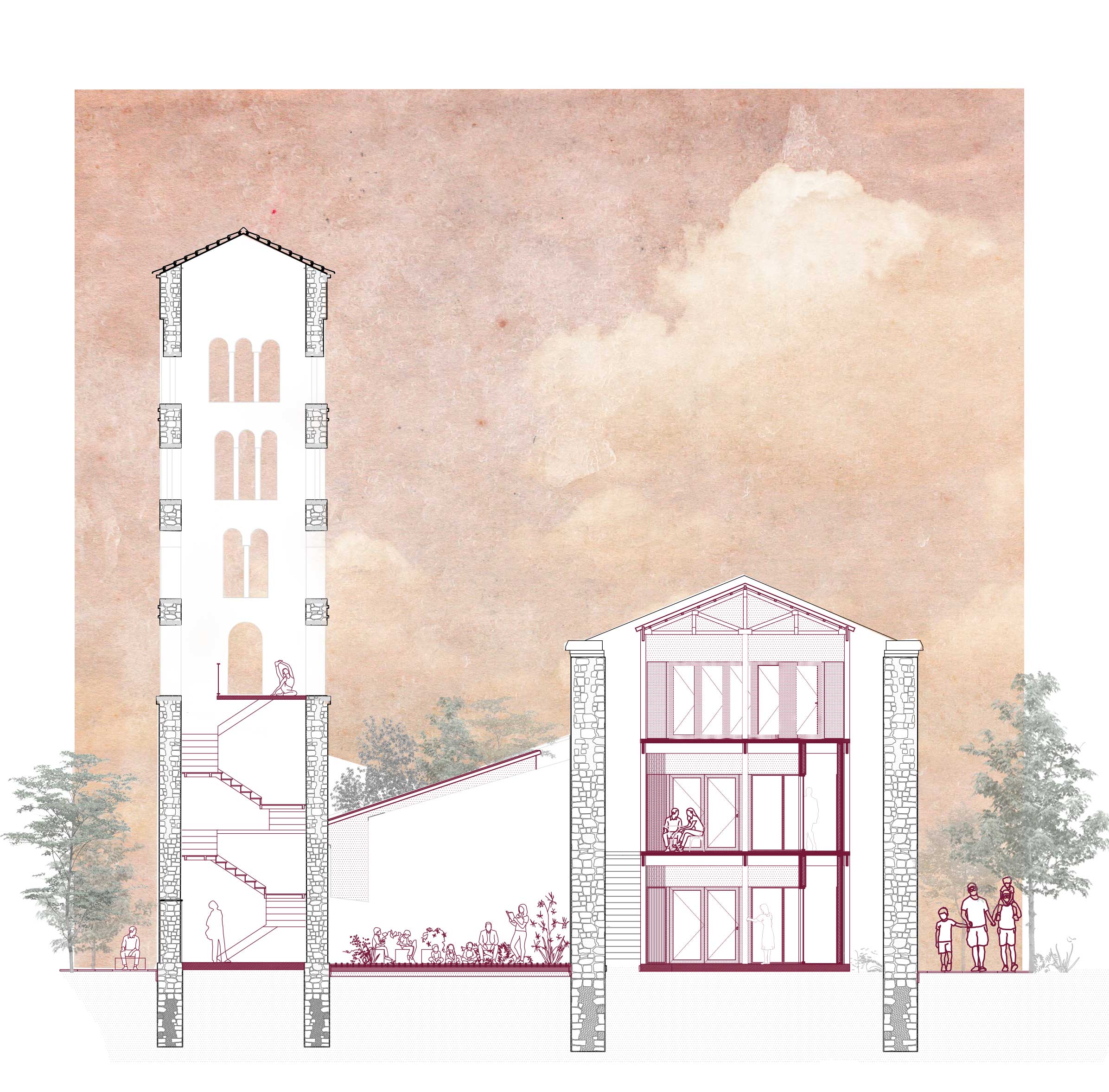
Light becomes a crucial design element through a dual-filter system. External translucent or transparent glass panels control natural illumination, while internal textile elements allow for dynamic space modulation. This interplay of light and shadow creates distinct atmospheres for the varied program: from the contemplative Silent Room and vertical Tower Room for meditation to the community-focused dining spaces and the central altar that doubles as a conference venue.
The program flows through a series of thoughtfully crafted spaces, connected by a ritualistic path that encourages both movement and stillness. A southeast-oriented outdoor meditation space captures morning light, while various indoor meditation rooms offer different experiences of introspection. Each space in Respiro delle Rovine is designed to foster a unique dialogue between the historic structure, natural elements, and contemporary interventions.
This architectural proposal doesn’t merely preserve history—it breathes new life into it, creating a sacred space where past and present, nature and architecture, silence and activity coexist in harmony.